
Meta Answers AI Data Center Criticism, but Who Pays for the Expansion?
Meta is responding to concerns about water, power prices, and jobs. The useful question is not whether data centers consume resources, but how costs and benefits are measured and allocated.
 3 分钟阅读
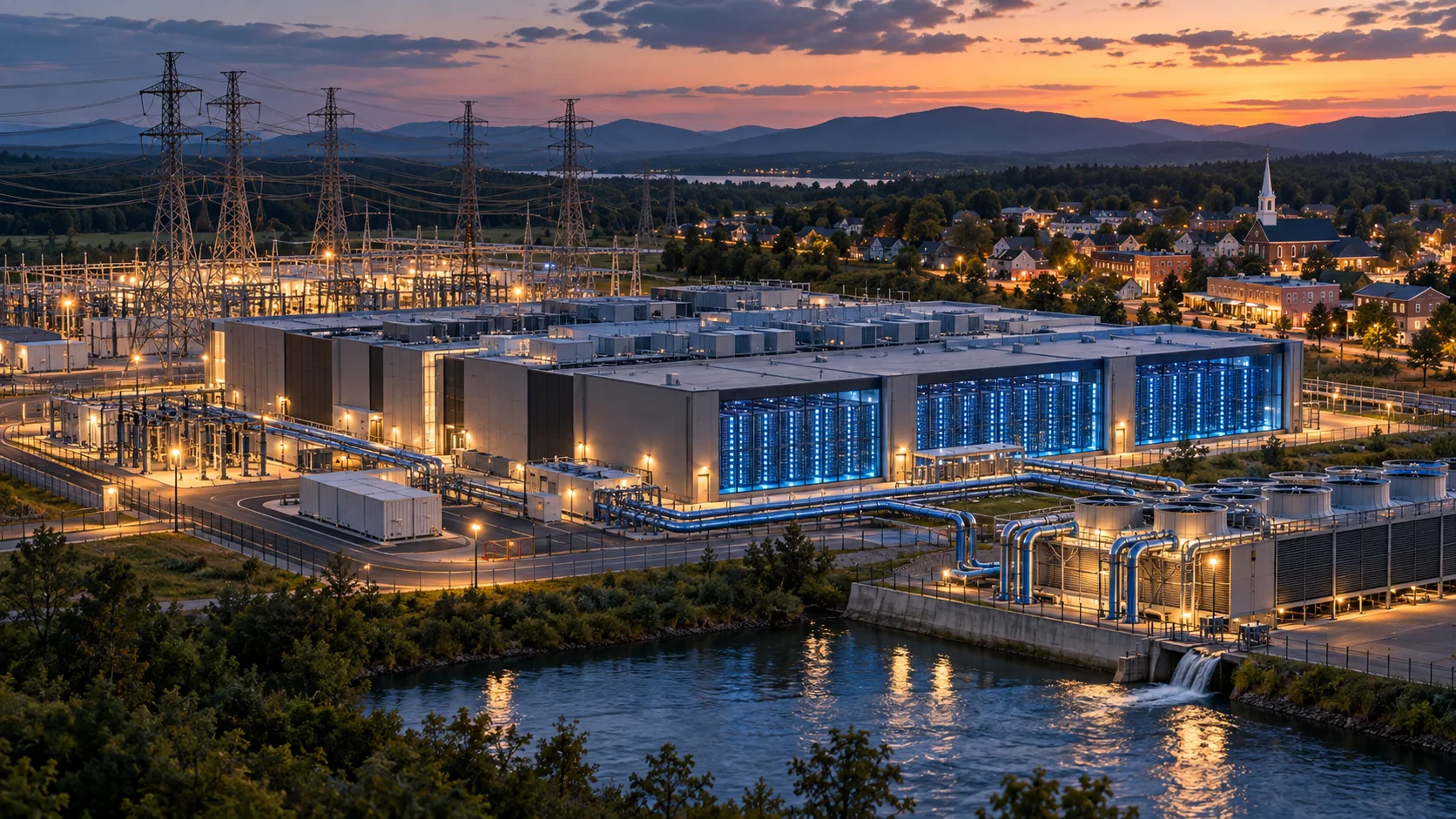
The AI data-center debate now covers water, power prices, jobs, and local infrastructure—not only chip performance. On October 8, 2026, Meta responded to three common criticisms. The article offers checkable corporate commitments, but it is also a stakeholder’s account and cannot replace utility records or community oversight.
Meta’s case
Meta says facilities visited by the author used closed-loop cooling or non-potable water, and that many Meta sites use less water annually than an average U.S. golf course. It says the company pays its energy bills and directly funds new or upgraded infrastructure required for additional demand. Construction creates many jobs, while steady-state operations employ fewer people and generate indirect activity.
Those claims concern facilities described by Meta and should not be generalized to every operator or location. A golf-course comparison is also incomplete: location, season, watershed stress, consumption, and discharge matter as much as annual volume.
The real question is who carries marginal cost
A large data center may sign dedicated power agreements and fund interconnection, but allocation of grid expansion, reserve capacity, congestion, and fuel risk depends on local regulation and rate design. Paying one’s own bill does not by itself prove that household rates are unaffected.
A stronger assessment uses public-utility filings, power-purchase contracts, peak load, transmission capital expenditure, tax incentives, and the risk of stranded assets if a project changes course.
Water needs more than one number
Direct cooling is only part of the water footprint; electricity generation may also consume water. Closed-loop systems can sharply reduce ongoing consumption but alter energy use and equipment choices. Useful reporting separates withdrawal from consumption and includes watershed stress, reuse, discharge, and operation during extreme heat.
Jobs should be reported by phase
Construction employment is large but temporary. Operational teams are smaller, although roles may be skilled and well paid. Governments should separately disclose temporary jobs, permanent positions, local hiring, median pay, and subsidy cost instead of one cumulative job number.
A shared checklist for investors and communities
- Is power capacity contracted, and who pays for transmission and reserves?
- Are withdrawal, consumption, reuse, and discharge disclosed by site?
- Do tax incentives match durable local employment?
- Does the project rely on generation, storage, or grid upgrades not yet built?
- Will efficiency gains be offset by larger models and more inference?
AI data centers bring capital investment, compute capacity, and some local revenue. They also consume physical resources. A serious discussion should move beyond “data centers are a disaster” and “all concern is a myth” by putting contracts, costs, and measured operations on the same ledger.